
Managing a business’s finances from a new country can feel daunting. Good bookkeeping is not only a legal requirement in Spain: it is also what lets you see how the business is really doing, file returns on time and answer the Tax Agency’s questions without stress. This article explains what Spanish law requires, the main deadlines and the practices that make bookkeeping easier.
What are the legal bookkeeping requirements for businesses in Spain?
The Commercial Code requires every business to keep orderly accounts suited to its activity, recording all its operations chronologically and allowing balance sheets and inventories to be drawn up regularly (Article 25). Companies keep, as a minimum, a journal (Libro Diario) that records operations day by day, and an inventory and annual accounts book (Libro de Inventarios y Cuentas Anuales), in which trial balances are entered at least quarterly (Article 28). For self-employed people, the bookkeeping duty depends on how their income is assessed: Article 104 of the Personal Income Tax Law requires those carrying on business activities under the direct assessment method to keep accounts under the Commercial Code, and the law sets other record books for other cases.
Which documents must expats and businesses keep for Spanish tax compliance?
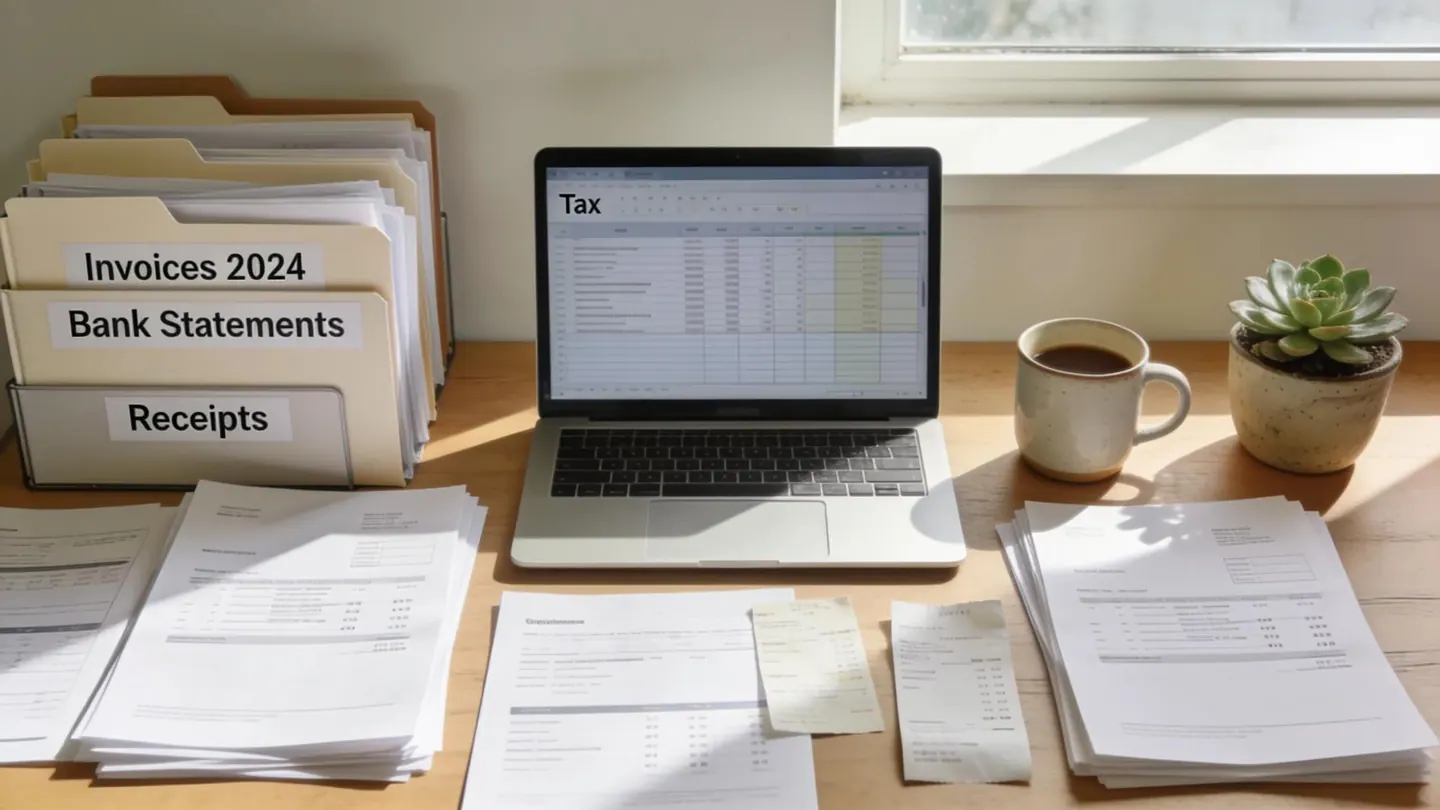
Keep, in an organised way:
- Invoices: copies of every invoice issued and the originals of every invoice received.
- Bank statements: to support every payment and receipt.
- Receipts and supporting documents for business expenses.
- Contracts: with customers, suppliers, landlords and employees.
- Tax returns and payment receipts.
- Annual accounts and the accounting books (companies).
The Commercial Code requires businesses to keep their books, correspondence and supporting documents for six years from the last entry in the books (Article 30). Tax law adds its own period: the Tax Agency’s right to assess tax generally expires after four years (Article 66 of the General Tax Law), and documents supporting figures that still have effects, such as losses carried forward, may need to be kept longer.
How often must accounting records be filed and updated according to Spanish law?
Records must be kept up to date continuously. The main periodic deadlines for a company whose tax year is the calendar year are:
| Requirement | Deadline |
|---|---|
| Annual accounts | Prepared by the directors within 3 months of the year end; approved by the general meeting within 6 months; filed at the Commercial Register within 1 month of approval (so by 30 July if approved on 30 June) |
| Corporate income tax return (Modelo 200) | Within the 25 calendar days after the 6 months following the year end (1 to 25 July) |
| Quarterly VAT return (Modelo 303) | First 20 calendar days of April, July and October; first 30 calendar days of January for the fourth quarter |
| Monthly VAT return | Only for businesses that must file monthly, for example those with turnover above 6,010,121.04 euros in the previous year: within the first 30 calendar days of the following month |
Your own calendar depends on your structure, staff and operations. Ask your adviser for a calendar built for your business.
How can good bookkeeping practices streamline your business operations in Spain?
Good bookkeeping saves time at every deadline and gives you reliable figures for decisions.
What are best practices for maintaining accurate Spanish accounting records?
- Record as you go. Enter invoices and receipts weekly or monthly, not once a quarter.
- Reconcile the bank. Check every month that the books match the bank statements.
- Keep one archive. One organised place, digital or physical, for every invoice and contract.
- Separate business and personal spending. It makes deductions and checks far simpler.
- Review before each return. Look at the figures with your adviser before filing, not after.
MMR Consultant provides bookkeeping and accounting support for expat-run businesses through our accounting team.
How does organised record keeping reduce administrative burdens and costs?
Organised records make returns faster to prepare, reduce the risk of errors and penalties, and make it much easier to answer a request from the Tax Agency. They also show where money is being spent, which helps cut unnecessary costs.
Which bookkeeping services and digital tools best support expat business compliance in Spain?
What outsourced bookkeeping services are available to expats in Spain?
Many expat business owners outsource part or all of the work. MMR Consultant offers, among other things:
- Bookkeeping and accounting management for individuals and companies.
- Preparation of financial statements and balance sheets.
- Tax returns through our tax services team.
- Payroll through our payroll team.
Which business accounting software solutions can help?
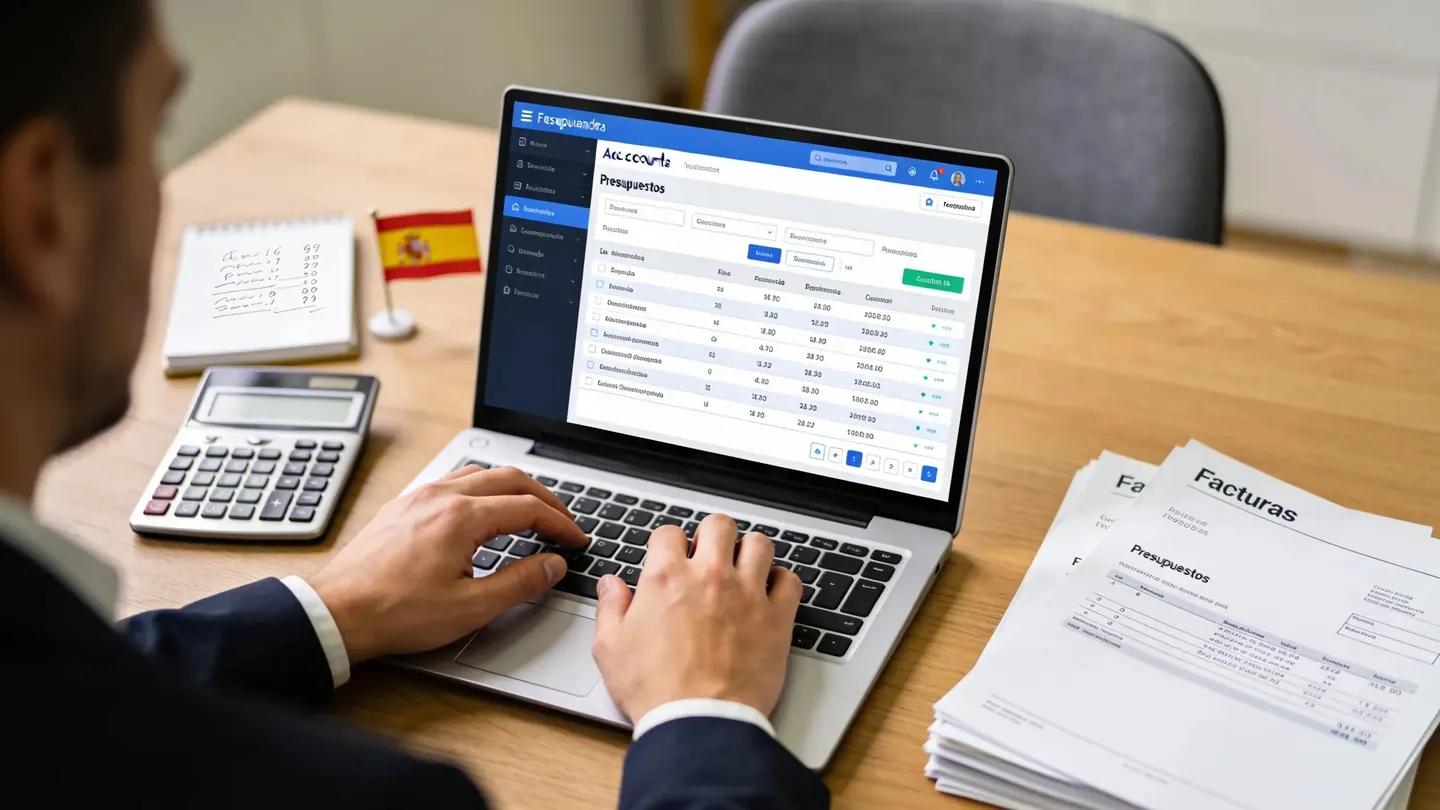
Cloud accounting tools such as Sage, Xero or QuickBooks are widely used for invoicing, expense tracking and reporting. Before choosing one, check with your adviser that the version you use supports Spanish invoicing and reporting requirements and can export what your accountant needs. Software helps, but it does not replace the review of a professional who knows Spanish rules.
How does reliable bookkeeping protect your business from financial risks and stress in Spain?
What are the consequences of inaccurate or incomplete Spanish accounting records?
- Adjustments, interest and penalties. If returns cannot be supported by the records, the Tax Agency can adjust the tax due and charge late-payment interest. Under Article 191 of the General Tax Law, failing to pay tax that a correct return would have shown is an offence, with penalties of 100% to 150% of the unpaid amount in very serious cases.
- Problems with the annual accounts. Late or incomplete accounts make it hard to approve and file them on time.
- Costly corrections. Errors found late usually mean amended returns and extra work.
How can expert advisory services help expats navigate Spanish tax rules?
An adviser can set up a bookkeeping system that fits your business, check the figures before each return and tell you which deadlines apply to you. Personalised advice is usually cheaper than correcting mistakes after the fact.
Frequently asked questions
How far can the taxman go back in Spain?
As a general rule, the Tax Agency’s right to assess tax expires after four years (Article 66 of the General Tax Law). The period can be interrupted, for example by an inspection, and the Commercial Code separately requires you to keep your books and documents for six years.
How we can help
MMR Consultant is based in Málaga with offices in Marbella. If you would like your bookkeeping set up or reviewed, contact us. For the first-year calendar of a new business, see our accounting essentials checklist, and for common pitfalls our article on accounting mistakes expats make.
Sources
Checked on 14 October 2026.
- Boletín Oficial del Estado, Commercial Code, Articles 25, 28 and 30.
- Boletín Oficial del Estado, Capital Companies Law, Articles 164, 253 and 279.
- Boletín Oficial del Estado, VAT Regulation (Royal Decree 1624/1992), Article 71.
- Boletín Oficial del Estado, Corporate Income Tax Law, Article 124.
- Boletín Oficial del Estado, Personal Income Tax Law, Article 104.
- Boletín Oficial del Estado, General Tax Law, Articles 66 and 191.
This article is general information, not tax advice for your case.